Freight Brokers Subject to Civil Liability per SCOTUS
May 15, 2026
On May 14, 2026, the Supreme Court of the United States issued a unanimous decision that could significantly expand freight brokers' liability exposure in trucking accident litigation, opening the door to state-law tort claims long considered preempted by federal law.
The decision in Montgomery v. Caribe Transport marks a potentially major shift in the legal landscape governing the trucking and transportation industry. The case arose from a highway collision involving plaintiff Shawn Montgomery, a commercial truck driver who pulled his tractor-trailer onto the shoulder of the road in Illinois. While he was on the shoulder, an employee of Caribe Transport drove off the roadway and crashed into his tractor-trailer, leaving Montgomery with catastrophic, permanent injuries.
In addition to suing the driver and Caribe Transport, Montgomery also brought claims against C.H. Robinson Worldwide, Inc., the freight broker responsible for arranging the load carried by Caribe Transport. The inclusion of the freight broker asserted a legal question that has divided courts nationwide for years: Does federal law preempt or block state-law negligence claims against freight brokers?
Until now, trucking accident lawsuits have typically targeted only the commercial driver and the trucking company involved in the crash. Freight brokers, companies that arrange transportation services by connecting shippers with trucking companies, were generally shielded from state tort claims under the Federal Aviation Administration Authorization Act of 1994 (FAAAA). C. H. Robinson Worldwide moved to dismiss the claims against it, contending that federal law blocked state tort suits related to freight brokers. Congress enacted the FAAAA in part to create national economic regulations governing prices, routes, and arguably, freight brokers rather than subjecting the industry to regulations that vary from state to state. The FAAAA still allowed states to regulate the safety aspects of the trucking industry, which encompassed state law claims against trucking companies and their drivers involved in accidents.
In some federal circuits, the states’ safety regulating power under the FAAAA had been interpreted broadly, allowing freight brokers to be sued for state-law torts alongside the trucking company and the commercial driver. Other federal circuits concluded that freight brokers were not covered by state safety regulations and thus could not be sued for state tort claims. The Supreme Court’s decision resolves the circuit split by clarifying that state-law tort claims against freight brokers fall within the FAAAA’s safety exception. In practical terms, the decision means freight brokers can be sued in all state courts for, among other common-law claims, the alleged negligent hiring or selection of unsafe trucking companies.
Some pundits argue the ruling could reshape the trucking industry because plaintiffs can now pursue parties with greater financial resources than individual drivers or smaller trucking companies. However, the Supreme Court clearly stopped short of imposing blanket liability on freight brokers. In a concurring opinion, Justice Brett Kavanaugh explained that freight brokers need only act reasonably when selecting trucking companies to avoid liability. For example, if they contract with a trucking company that has a known history of hiring dangerous drivers, they may open themselves up to liability. State-law torts like negligence require proof of “foreseeability,” meaning that for a broker to be liable, it must be foreseeable that selecting a particular trucking company would likely lead to an accident. A broker can avoid liability by acting diligently and reasonably in researching the safety histories of the companies they contract with.
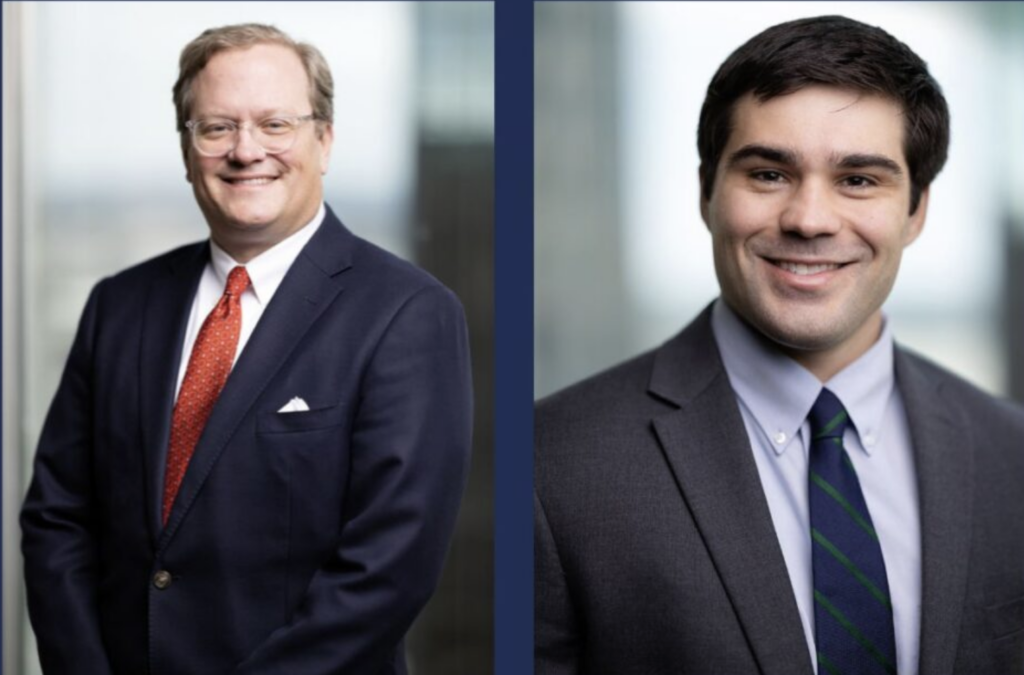
Client questions regarding this legal update can be directed to Michael A. Vercher.
Michael A. Vercher is an equity partner and practices in the Birmingham, Alabama, office. He is currently serving in his second term on the firm's Executive Committee and chairs the firm's Transportation Practice Group. He serves as Program Chair for the American Bar Association Tort Trial & Insurance Section (TIPS): Transportation Megaconference. Mike was recently elected to serve a four-year term on the city council of Vestavia Hills, Alabama.
J. Ford Mozingo is an Associate in the Birmingham, Alabama office, where he works across various areas of litigation. He earned his bachelor's degree summa cum laude from the University of Alabama and his Juris Doctor from the University of Alabama School of Law.
About Christian & Small
Christian & Small LLP serves a diverse client base across Alabama, the Southeast, and nationwide, including individuals, closely held businesses, and Fortune 500 companies. By pairing highly experienced lawyers with clients' specific needs, Christian & Small delivers innovative, effective, and efficient solutions tailored to each client. With offices in Birmingham and Mobile, Alabama, and Jackson, Mississippi, Christian & Small specializes in litigation and business law and is a member of theInternational Society of Primerus Law Firms. Our corporate social responsibility initiatives focus on education, and diversity remains one of Christian & Small's core values.
No representation is made that the quality of legal services to be performed is greater than the quality of legal services performed by other lawyers.
Partner Priscilla K. Williams Obtains Complete Defense Verdict of Insurance Client On May 19, 2020, while on vacation in Gulf Shores, the injured plaintiff was a front seat passenger in her friend’s vehicle that was rear-ended at a stop light. Despite Plaintiff’s testimony that the impact felt severe and she was projected forward, the evidence […]
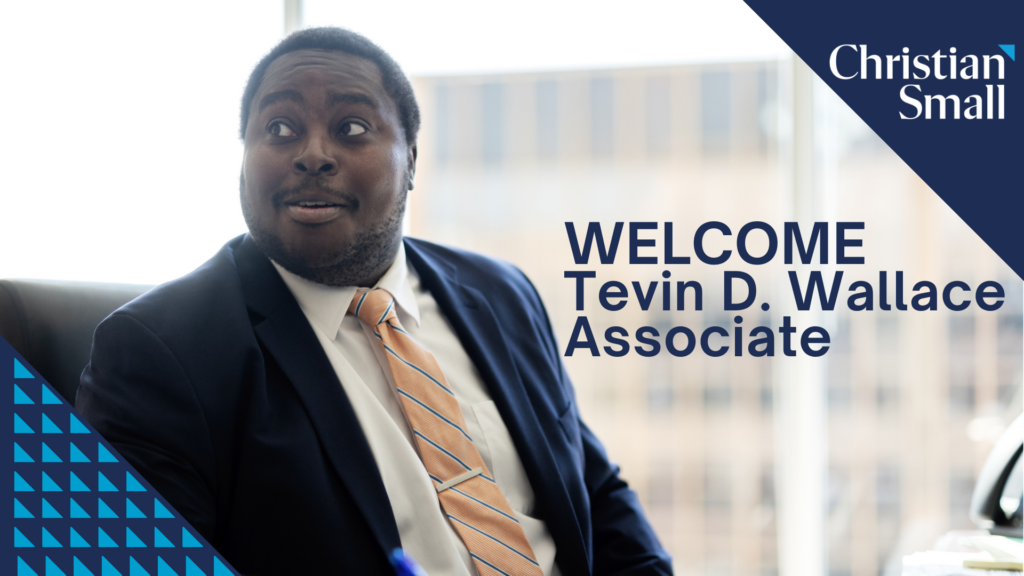
Christian & Small is pleased to welcome Tevin D. Wallace as the newest associate in the Firm’s Birmingham office. Tevin’s practice focuses on litigation with an emphasis on construction, insurance, product liability, and transportation. He is a native of Birmingham, Alabama, and his commitment to the practice of law is rooted in both family tradition and personal […]
Restaurant and Hospitality Client Alert – ID Scanner Data Breach M. Jansen Voss is investigating a possible data breach at IDScan.net that may have affected bar and restaurant clients. IDScan.net provides hardware and software for ID scanning and age verification. Many bars and restaurants nationwide use the service, including those in Alabama. The IDScan.net data […]