Five Issues for Restaurants, Bars, and Breweries to Consider Before Opening Temporary Outdoor Dining and Entertainment Space
Prepared by Jansen Voss
December 14, 2020
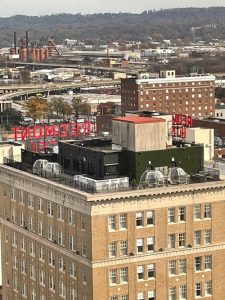 This is the view looking southeast from atop my perch on the 18th floor of the Financial Center in downtown Birmingham. That's Sloss Furnace in the upper left-hand corner. It's a National Historic Landmark dating from the 1880s, and it’s the only surviving blast furnace in the United States. In the foreground, you see the rooftop deck of the 14-story Redmont Hotel built in 1926. If you look closer, you'll see some clear plastic tents. Those tents arrived a few weeks ago along with 40-degree temperatures here in Birmingham.
The tents are part of a larger effort on the part of restaurants, bars, and breweries throughout the country to comply with social distancing guidelines while meeting the demand for food and beverage during the colder months of the year. Pre-COVID, Redmont patrons abandoned the rooftop deck for warmer indoor quarters this time of year. However, social distancing requirements and reduced maximum occupancy regulations, have forced restaurants, bars, and breweries to erect temporary outdoor structures to accommodate patrons when the temperature drops. These structures are popping up along sidewalks, parking lots, and rooftop decks, and raising interesting legal issues.
Leases
Restaurants, bars, and breweries should dust off their lease agreements before utilizing sidewalks, driveways, and other outside areas. Most retail leases specifically describe the leased (or demised) premises as only the indoor space of a building. Sidewalks, parking areas, and the like may be considered common areas. Restaurants, bars, and breweries should talk to their landlords and re-define, the leased premises and the rights and obligations in connection with the use of outdoor spaces. In negotiating these terms, tenants should consider liability, indemnification, and insurance issues.
Insurance Coverage
Restaurants, bars, and breweries should dust off their insurance policies and contact their insurance brokers. Are your outdoor operations insured? If a temporary tent is destroyed in a storm, is that covered? Or worse, if a tent is blown across the street and through the front window of a neighboring business, is that covered? If you are using temporary heating sources inside of a potentially flammable tent, is that covered?
Americans With Disabilities Act (ADA)
The ADA has strict accessibility requirements for persons with disabilities. You should ensure that temporary outdoor spaces are accessible to customers. That may entail ramps, and enough space between tables to comply with wheelchair clearance requirements as well as social distancing requirements.
Alcohol Service
Some states prohibit the service of alcohol outside the space specifically described in the restaurant's bar or brewery alcohol license application. Those regulations are often strictly enforced and can have punitive consequences. So, before serving alcohol in a temporary outdoor space, check with your state and local alcohol licensing agency. Many agencies across the country have relaxed these strict guidelines to accommodate the recent trend in temporary outdoor structures.
Premises Liability
Restaurants, bars, and breweries are responsible for keeping the premises safe for patrons and/or warning the patrons of dangers on the premises. Restaurants, bars, and breweries may be held liable for injuries indoors and outdoors. The most common incidents in restaurants, bars, and breweries involve injuries resulting from food poisoning and slip hazards such as wet/slick floors and uneven floors. Temporary outdoor spaces present dangers from tent poles, ropes, straps, and tent stakes. Outdoor heaters have been a hot commodity (pardon the pun) in the last couple of months. Some heaters are powered via electricity and others via propane gas. Aside from the obvious risk of burn injuries, noxious gases from gas heaters present a risk of injury to patrons. This potential danger should be on the front burner (again, sorry for the pun) for restaurants, bars, and breweries as the weather gets colder.
About Christian & Small
Christian & Small represents a diverse clientele throughout Alabama, the Southeast, and the nation with clients ranging from individuals and closely-held businesses to Fortune 500 corporations. By matching highly experienced lawyers with specific client needs, Christian & Small develops innovative, effective, and efficient solutions for clients. With offices in Birmingham, metro-Jackson, Mississippi, and the Alabama Gulf Coast, Christian & Small focuses on the areas of litigation and business, is a member of the International Society of Primerus Law Firms, and is the only Alabama-based member firm in the Leadership Council on Legal Diversity. Our corporate social responsibility program is focused on education, and diversity is one of Christian & Small's core values.
No representation is made that the quality of legal services to be performed is greater than the quality of legal services performed by other lawyers.