Alabama Alcohol Beverage Licensing and Compliance
This is the third post (Part III) in a seven-part series on alcohol beverage licensing and compliance in Alabama. Part I provides a brief history of the ABC Board and an overview of the regulatory framework in Alabama. Part II outlines issues you should consider before applying for an Alabama Beverage Control Board License. Part III outlines the ABC licensure process. Part IV summarizes key regulatory provisions applicable to on-premises licensees. Part V summarizes key regulatory provisions applicable to off-premises licensees. Part VI discusses ABC enforcement actions and ABC administrative hearings. Part VII provides an overview of the ABC's Responsible Vendor Training Program.
Part III: The Alabama Alcoholic Beverage Control Board Licensure Process
 The licensure of alcohol manufacturers is complex and outside the scope of this article. Look for an article in the future on manufacturer licenses. For our current purposes, I’ll focus on licensure of retail licensees like bars, restaurants, hotels, grocery stores, gas stations, convenience stores, and package stores. The following is a laundry list of things to address:
- Conduct the due diligence outlined above: a) business plan, b) wet/dry, c) license type, d) engage local government.
- Contact your local ABC Board Licensing and Compliance division office. Explain your business plan and intended business location. In my experience, ABC Board Licensing and Compliance personnel are friendly and helpful. Often, they will point out roadblocks or challenges you may face in obtaining a particular license in a particular location. Contact information for your local division office can be found on the ABC Board’s website: https://alabcboard.gov/licensing-compliance/divisions
- Download a copy of the Pre-Application Checklist and Pre-Application Form from the ABC Board’s website: https://alabcboard.gov/licensing-compliance/how-to-apply and begin gathering the requested information. The following are a few comments on the checklist and pre-application:
- Every person with an ownership interest in the business must submit background information to the ABC Board and undergo a background check, including fingerprinting. This can get very complicated for business entities with complex ownership structures—especially for venture capital or private equity-backed businesses. I have helped venture capital and private equity interests navigate this challenge. Note that publicly traded corporations are exempt from this requirement.
- Obtain color copies of the valid driver's license, and a certified copy of the birth certificate (or US Passport), for each person with an ownership interest in the business.
- Obtain copies of your business entity’s formation documents.
- Obtain copies of your lease, or deed if you own the property.
- Obtain a health department inspection and license.
- Obtain dram shop insurance. Contact your insurance agent for help.
- Obtain a sales tax license.
- Obtain your federal tax ID number.
- Obtain an architectural rendering or sketch of the floor plan for the licensed premises.
- Obtain a letter of approval or resolution from the local governing body. See below.
- It is important to note you cannot obtain a license without showing proof of ownership, or proof of a lease, of the location where you plan to sell alcohol. So, the process requires a financial commitment in the form of ownership of the property or lease of the property without the absolute guarantee you’ll get an ABC Board license. This is why due diligence, communication with local government, communication with the ABC Board, and engaging a lawyer are all important early steps to increase the likelihood you will obtain a license.
- Additional requirements are outlined in detail on the ABC Board’s pre-application checklist.
- Apply for a local government alcohol license. Although local government approval processes differ across the state, generally speaking, the local government will require the following:
- License application. Many local governments have their own alcohol license applications. Some smaller local governments simply require that you submit a copy of your ABC Board license application to the local government.
- Community approval. Often local governments will require the license applicant to notify neighboring property owners, businesses, and tenants of the license application. In some cases, neighborhood association approval is required.
- Committee meeting. An alcohol license is typically first considered by the local government’s health and safety committee. However, the name of the committee may be different in your area. In some smaller local governments, the application may not go through a committee at all; the application may go straight to the town council. If the application goes through a committee, the committee will likely require your attendance at the meeting. You may be questioned by committee members and local citizens may voice their approval or disapproval of your application. The committee may recommend to the local governing body that your application be approved (or not).
- Local governing counsel. The committee’s recommendation for approval will then be considered by the local governing body. Your attendance is likely necessary. Local citizens will be given an opportunity to voice their approval or disapproval of your application.
- Historically, the ABC Board has required applicants to schedule an in-person meeting at the local ABC Board licensing office. However, the ABC Board has relaxed that requirement and may only require a telephone or zoom meeting. Check with your local office for up-to-date information.
- Above all, do not lie, misrepresent, or leave out requested information. You will find the ABC Board easier to work with if you are open and honest about who you are, and what you are attempting to accomplish.
For some applicants, the licensure process is simple and straightforward. However, the following applicants may find the process more difficult to navigate without legal assistance:
- Businesses with complex business structures such as hotels, and venture capital or private equity-backed entities,
- Publicly held corporations,
- Non-profits,
- Entertainment venues such as ax throwing, bingo, sports stadiums, and concert venues,
- Owners with criminal records, and,
- Out-of-state or foreign owners.
Up next, Part IV, Key On-Premises Regulatory Provisions
Part I: History and Regulatory Framework
Part II: Issues to Consider Before Applying for an Alabama Beverage Board License
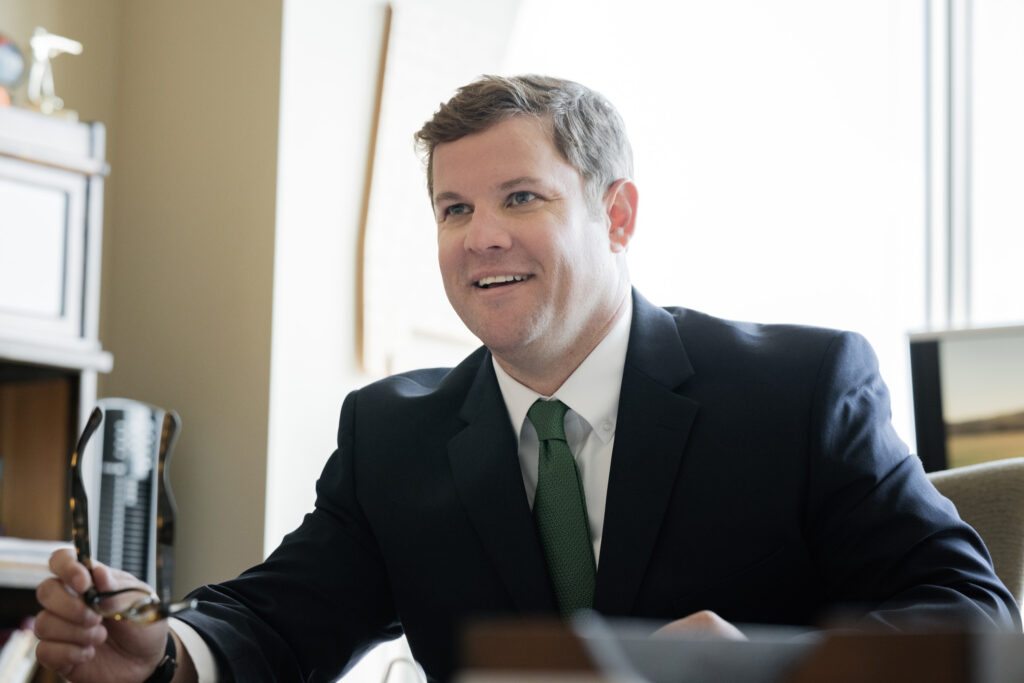
 Jansen Voss is a partner with Christian & Small law firm. With offices in Birmingham and the Alabama Gulf Coast, Jansen represents bars, restaurants, hotels, breweries, distilleries, grocery stores, gas stations, convenience stores, and liquor stores throughout the state of Alabama. He assists businesses with the ABC licensure process and consults on alcohol regulatory matters. Jansen defends ABC licensees in administrative enforcement actions before the Alabama Alcoholic Beverage Control Board Hearing Commission. He is approved by the Alabama Beverage Control Board to provide Responsible Vendor training throughout the state of Alabama for both on-premises and off-premises licensees. Jansen also routinely defends alcohol licensees in Dram Shop civil lawsuits in state courts throughout the state of Alabama. Jansen’s clients include large chain restaurants, award-winning fine dining restaurants, large grocery store chains, and large gas station and convenience store chains. He also represents local breweries, distilleries, restaurants, grocery stores, gas stations, and convenience stores. Jansen can be reached at 205-250-6632 or at mjvoss@csattorneys.com
About Christian & Small
Christian & Small LLP represents a diverse clientele throughout Alabama, the Southeast, and the nation with clients ranging from individuals and closely-held businesses to Fortune 500 corporations. By matching highly experienced lawyers with specific client needs, Christian & Small develops innovative, effective, and efficient solutions for clients. With offices in Birmingham, metro-Jackson, Mississippi, and the Alabama Gulf Coast, Christian & Small focuses on the areas of litigation and business, is a member of the International Society of Primerus Law Firms, and is the only Alabama-based member firm in the Leadership Council on Legal Diversity. Our corporate social responsibility program is focused on education, and diversity is one of Christian & Small's core values.
No representation is made that the quality of legal services to be performed is greater than the quality of legal services performed by other lawyers.