


Protecting Childcare Facilities From COVID-19 Exposure and Infection Claims
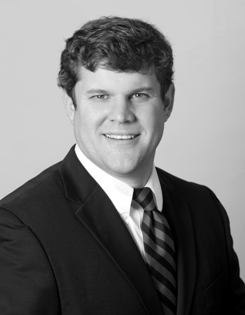
Prepared by M. Jansen Voss
June 2, 2020
There are as many opinions as there are lawyers on how the legal system is going to handle claims for COVID-19 exposure and infection. Much of the uncertainty surrounding COVID-19 exposure and infection liability revolves around how a Plaintiff will connect a businesses’ negligence to the Plaintiff’s COVID-19 infection. The legal term for this issue is proximate cause. Did the business’ negligence cause or contribute to cause the Plaintiff’s COIVD-19 infection. To prove this, the Plaintiff will have to proffer evidence that he/she actually contracted COVID-19 at the business and as a result of the business’ wrongful acts or wrongful failure to act. At the present time, this looks like a tall order.
Follow established guidelines, and document compliance
State and local health departments have issued public health orders and guidance concerning how businesses and the general public should guard against the spread of COVID-19. It is important that businesses and the general public follow those orders and guidelines. For businesses, it is important to document compliance with health department orders and guidance. Many businesses, including restaurants, already document restroom cleaning and cold storage food temperature. Cleaning procedures implemented in light of public health orders and guidance should likewise be documented.
Hold Harmless and Waiver of Liability
Many sports facilities and entertainment venues require participants, and in some cases, spectators, to sign liability waivers and hold harmless agreements. These agreements can be narrowly tailored to the current COVID-19 crisis. The agreements should:
- Notify the customer, participant or spectator of the policies and procedures the business has in place to comply with public health orders and guidance.
- Acknowledge that the policies and procedures help lower the likelihood of exposure but do not guarantee no exposure or infection.
- The customer agrees not to pursue a claim or legal cause of action against the business for injuries, damages, or losses of any kind in connection with COVID-19 exposure or infection, or COVID-19 exposure or infection resulting from an act or omission by the business.
- For businesses providing services to children, playgrounds, daycares or other similar businesses, the parent or guardian of the child should agree to hold the business harmless and indemnify the business from any claims filed by, or on behalf of the child. A release signed by a minor is almost always voidable by the minor. So, it is important that the person bringing the child to your business, or the person allowing your business to provide services to the child, sign a hold harmless and indemnity agreement.
In Loco Parentis Immunity for Child Care Providers
The parental immunity doctrine bars civil suits brought by unemancipated minor children against their parents. Mitchell v. Davis, 598 So. 2d 801 (Ala. 1992). Non-parents who stand in loco parentis (in place of the parent) are entitled to immunity as to negligence claims in certain situations. Hinson v. Holt, 776 So. 2d 804 (Ala. Civ. App. 1998); Hurst v. Capitell, 539 So. 2d 264 (Ala. 1989); Mitchell v. Davis, 598 So.2d 801, 805 (Ala.1992). This doctrine of immunity does not apply to a minor’s claim of assault or abuse against a parent or one who stands in loco parentis.
In Alabama, a non-parent stands in loco parentis if he or she (1) assumes the obligations incident to parental status, without legally adopting the child, and (2) voluntarily performs the parental duties to generally provide for the child. In making a determination as to whether a non-parent stands in loco parentis, courts consider the totality of the circumstances. Performing parental duties generally means: (1) providing support and maintenance for the child, (2) providing day-to-day care for the child, (3) displaying a true interest in the well-being and general welfare of the child, and (4) educating, instructing, and caring for the child. These factors are not exhaustive, and courts should determine from the facts of each case whether the person claiming in loco parentis status is performing parental duties. The Alabama Supreme Court has identified two clear situations in which a person or entity who is not a minor’s parent stands in loco parentis: Teachers and the Alabama Department of Human Resources. Deal v. Hill, 619 So.2d 1347, 1348 (Ala.1993)(quoting Suits v. Glover, 71 So.2d 49, 50 (1954)); Hinson v. Holt, 776 So.2d 804 (Ala. Civ. App.1998); Mitchell v. Davis, 598 So.2d 801, 805 (Ala.1992). Although his line of cases has not been recently tested in the appellate courts, an argument could be made that a childcare provider, standing in loco parentis, is immune from COVID-19 infection claims filed on behalf of a child, provided the child care provider was not guilty of wanton or willful conduct.
Alabama Senate Bill 330
Alabama Senate Bill 330 of the 2020 legislative session provides civil immunity for business entities, health care providers, educational entities, churches, governmental entities, and cultural institutions operating in Alabama, as well as employees and agents of these entities from COVID-19 exposures or infection. The Bill protects businesses and employees of said businesses from COVID-19 exposure or infection claims arising out of the business’ operations, products or services; a business’ efforts to prevent or delay the spread of COVID-19; and the business’ use or supply of personal protective equipment. Immunity applies provided that the business reasonably attempts to comply with public health guidelines. The immunity does not apply if the business or employee acts wantonly, recklessly, willfully, or intentionally exposes or infects a person. The Bill, if it becomes law, would be retroactive to claims filed on or after March 13, 2020. It is important to know that this Bill has not become law as of the writing of this post. I encourage you to monitor this Bill as it works its way through the legislative process.
About Christian & Small
Christian & Small LLP represents a diverse clientele throughout Alabama, the Southeast, and the nation with clients ranging from individuals and closely-held businesses to Fortune 500 corporations. By matching highly experienced lawyers with specific client needs, Christian & Small develops innovative, effective, and efficient solutions for clients. With offices in Birmingham, metro-Jackson, Mississippi, and the Alabama Gulf Coast, Christian & Small focuses on the areas of litigation and business, is a member of the International Society of Primerus Law Firms, and is the only Alabama-based member firm in the Leadership Council on Legal Diversity. Our corporate social responsibility program is focused on education, and diversity is one of Christian & Small’s core values.
No representation is made that the quality of legal services to be performed is greater than the quality of legal services performed by other lawyers.