

In handling cases for homeowners’ insurance carriers over the last twenty years, there are some issues that appear again and again. Often, these coverage issues can be avoided by following these ten basic tips.
-
Take Pictures.
You know what’s in your home. An adjuster coming in after the house was destroyed sometimes cannot tell what personal property you may have lost. Take pictures and keep them somewhere outside of your home. In the event of a total loss, you can easily document your possessions. That will help your claim go faster help you prove your claim. If you had 25 televisions in your house, having pictures of those televisions will go a long way in getting them replaced.
-
Check if you need additional coverage.
Your big-ticket items may not be covered under your standard homeowners’ policy or your policy may have minimal limits for those items. If you have expensive jewelry or a valuable collection, there’s a very good possibility that your standard homeowner’s insurance will not cover it fully or at all. Check your policy and ask about additional coverages. The value of a lost or stolen engagement ring is likely not covered under your homeowner’s policy absent additional coverage.
-
Be able to show proof.
Keep some proof of the existence of these big-ticket items – pictures, receipts, and appraisals will help you get your claim paid if you have coverage. If you allege that you had a $100,000 grand piano in the den prior to the fire, pictures of it in the den along with a receipt or appraisal can only help your claim. Keep copies of these things outside of your home. If you must keep them inside of your home, make sure they are on the list of possessions you take with you if you have to evacuate.
-
Read your policy.
Make sure the policy is the right policy for you and your needs. For example, some policies will only cover liability for certain domestic animals. Have a pet goat who thinks he’s a guard goat? The policy might not meet your needs. Some policies will not cover you if you have more than 5 acres or a body of water like a pool or a pond. Make sure those underwriting exclusions do not apply to you. It is better to adjust your coverage before you have a loss than to be faced with the possibility of no coverage at all after you have incurred a loss. Also, take a look at the limits. Make sure that your home is insured to value.
-
Make certain that the insurance company has accurate and up-to-date information about your policy.
Did you add a pool since you got the policy? If so, let the insurance company know right away. Did you get divorced and your spouse is no longer on the policy, mortgage, or deed? Your policy may need to be changed. This could save you much frustration later if you have a claim.
-
Keep your mortgage information up to date.
Did you refinance or pay off your mortgage? Make sure you let your insurance company know. You want to make sure your premiums get paid on time and money does not get held up in escrow. You do not want to make a claim only to find out that your policy had been non-renewed because the bank never paid the premiums out of your escrow.
-
Be honest in your application and read it and make sure it’s accurate before you sign it.
Did you have a bankruptcy, repossession, or foreclosure? Answer that honestly on your application. There are policies available in those circumstances, but not from all carriers. You do not want to find yourself in the position of having a loss only to have your policy voided because you did not disclose a bankruptcy. Agents can help you find and obtain coverage that is right for you.
-
Confirm that you received your policy renewal.
Most policies will automatically renew unless you or the insurance company cancel them. If you haven’t received a notice of cancellation and haven’t received notice of policy renewal, call your insurance company or agent. You do not want your coverage to lapse. Those of us who live on the Gulf Coast might not give a lot of thought to our homeowner’s insurance until we’re in the path of a hurricane. If you checked your policy then and found out that it had canceled or lapsed, you may not be able to get any new coverage if that storm is in the Gulf. Most would not want to ride out a hurricane with no insurance.
-
Make sure all the structures are covered.
Do you have a shed? A boathouse or a dock? If you have structures on your property other than your house, those are typically covered under a different part of your policy. Coverage A limits apply to the house. The “other structures” are covered under your Coverage B limits. Make sure you have coverage for other structures and make sure that the amount is sufficient. When lightning struck Cheryl’s she-shed, her claim would have been made under Coverage B, not Coverage A. Want to make sure your stand-alone man-cave or she-shed is covered? Check your Coverage B limits.
-
Read your policy.
Make sure that it meets with your understanding of the coverages for which you applied.
If you have questions, ask. It is always better to resolve a policy issue before a loss.
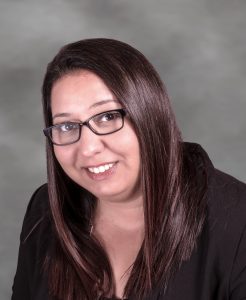
Partner Christina May Bolin has nearly 20 years of experience defending individuals, businesses, and insurers against lawsuits and liability claims, and assisting clients in the development of strategic solutions to legal disputes and litigation risks. She routinely defends property and casualty insurers in direct actions involving large property losses, catastrophic casualty claims, complex insurance coverage questions, and fraud and bad faith.
About Christian & Small
Christian & Small LLP represents a diverse clientele throughout Alabama, the Southeast, and the nation with clients ranging from individuals and closely-held businesses to Fortune 500 corporations. By matching highly experienced lawyers with specific client needs, Christian & Small develops innovative, effective, and efficient solutions for clients. With offices in Birmingham, metro-Jackson, Mississippi, and the Alabama Gulf Coast, Christian & Small focuses on the areas of litigation and business, is a member of the International Society of Primerus Law Firms, and is the only Alabama-based member firm in the Leadership Council on Legal Diversity. Our corporate social responsibility program is focused on education, and diversity is one of Christian & Small’s core values.
No representation is made that the quality of legal services to be performed is greater than the quality of legal services performed by other lawyers.